Learning is now not limited to classrooms or fixed schedules. People now learn on phones, tablets, and even laptops between work and daily tasks. This clearly shows technology has changed education in multiple ways. And that’s why education app development has become a practical necessity for businesses, institutions, and universities. E-learning platforms, digital classrooms, e-books, and many educational innovations are some examples of this digital transformation.
Building a well-designed learning app supports quick learning and helps businesses see higher engagement and universities see better outcomes. Hence, this blog will cover core features, the step-by-step development process, and realistic cost expectations, along with how the right educational app development services help rework and decrease long-term expenses.
What is an Education App?
An immersive education app makes learning virtually possible and accessible. And these are not just for learners but also for instructors, corporate employees, or anyone looking to enhance their skills or abilities.
Education app development brings content, modern technology, and experience all together. Students can access these from anywhere, anytime, and on any device. Online learning platforms support schools, universities, enterprises, startups, and large organizations. They offer a complete ecosystem that grows with the user base and business requirements.
The modern audience wants something extraordinary, and today’s edtech apps don’t follow traditional classroom rules. Instead, these offer live classes, recorded sessions, AI-powered recommendations, progress tracking, gamification, and much more. That’s why e-learning app development is not limited to institutes only. Now, large corporate organizations use these to train employees, and startups use these to enhance reach.
Who Uses Educational Apps?
Edtech apps are used for many different purposes by different individuals. For example:
- Candidates and learners who need support in exam preparation.
- Professional enhancing skills, people advancing their knowledge.
- Educational institutes are to address various learning challenges.
- Teachers and instructors are tracking student performance.
- Parents engage their young kids in interesting learning activities.
Market Overview
- The global education tech market size is expected to hit USD 348.41 billion by the end of 2030.
- North America accounted for the largest share of 37.2% and dominated the edtech market.
- Businesses account for 67.8% of end-users, demonstrating corporate investment in training and upskilling via digital learning platforms.
Why Businesses Should Invest in Education App Development
Traditional learning methods are not enough for growing user needs with a shorter time span, remote working, and on-demand access. To meet all these needs, businesses should take the help of a trustworthy mobile app development company.
Remote Learning
Education apps make learning location-independent. Teams, students, and instructors can connect without physical boundaries.
Accessibility & Flexibility
Learning content remains available anytime and on any device. Users can study at their own pace without fixed schedules.
Measurable Learning Progress
Digital platforms track performance, completion rates, and engagement. This data helps businesses improve content and learning outcomes.
Better Engagement
Interactive elements like videos, quizzes, and live sessions keep users involved. Visual learning formats hold attention longer than text-heavy material.
Users are naturally more attracted to images than plain text. Visual content improves understanding, retention, and overall learning experience.
Types of Educational Apps
The edtech industry is not uniform. Every learner has different needs, budget, challenges, and goals. That’s why education app development is not a one-size-fits-all approach. Rather, it depends on who you are building for and why.
Learning Management System (LMS)
LMS apps handle courses, users, exams, reports, and a lot of data. These systems support heavy usage and complicated workflows.
Corporate Training and Employee Learning Apps
Employee learning apps help resolve internal problems, like onboarding, compliance, or skill upgrades. These apps include short lessons, role-based access, and manager views. Businesses can save both time and money by investing in edtech app development services.
Exam Preparation Apps
Exam preparation apps focus on practice tests, mock exams, and performance analysis. They help learners track progress, identify weak areas, and prepare systematically for competitive exams.
Live Tutoring Apps
Live tutoring apps connect learners with instructors in real time. These apps support one-on-one or group sessions and rely heavily on video, chat, and scheduling features.
Online Courses and eLearning Apps
Online learning apps deliver structured courses through videos, quizzes, and assignments. They are widely used for self-paced learning and long-term skill development.
Must-Have Features for Educational App Development
Well-planned education app features improve usability, engagement, and learning outcomes. Below are the essential features every modern educational app development project should include.
Search & Filter:
Helps users find courses, topics, or lessons quickly. Saves time and improves navigation.
User-Friendly Interface:
Keeps the app simple and intuitive. Reduces learning friction for first-time users.
User Dashboard:
Displays progress, enrolled courses, and upcoming sessions. Gives learners a clear view of their journey.
Push Notifications:
Sends reminders for classes, updates, and deadlines. Helps maintain learner engagement.
Live Sessions:
Supports real-time interaction between learners and instructors. Essential for online learning app development.
Session Recording:
Allows users to replay missed or complex lessons. Improves learning flexibility.
Offline Accessibility:
Enables access to downloaded content without the internet. Important for mobile education app development in low-connectivity areas.
Video Learning Resources:
Delivers structured video-based lessons. Enhances understanding and retention.
Payment Gateways:
Supports secure course purchases and subscriptions. Builds trust and simplifies transactions.
Social Media Integrations:
Allows easy sharing and login. Helps expand reach and user engagement.
Secure File Sharing:
Ensures safe exchange of study materials and documents. Protects sensitive educational data.
Gamification:
Adds rewards, badges, and progress levels. Encourages consistent participation and motivation.
These features form the foundation of scalable and user-focused educational app development.
Tech Stack Required for Building a Robust eLearning App
Below is a breakdown of technologies used for building an educational app:
| For iOS Apps | Programming language: SwiftNetworking: Alamfire |
| For Android Apps | Programming language: KotlinNetworking: OkHttp 3 |
| Back-End Development | Programming language: Node.jsFramework: Express 4Database: MySQLAPI: Swagger |
| Tools | Signup: Amazon SES, Amazon SNSPush notifications: FCMEmails: Elastic emailStorage: Amazon S3Search: ElasticsearchPayment: Braintree |
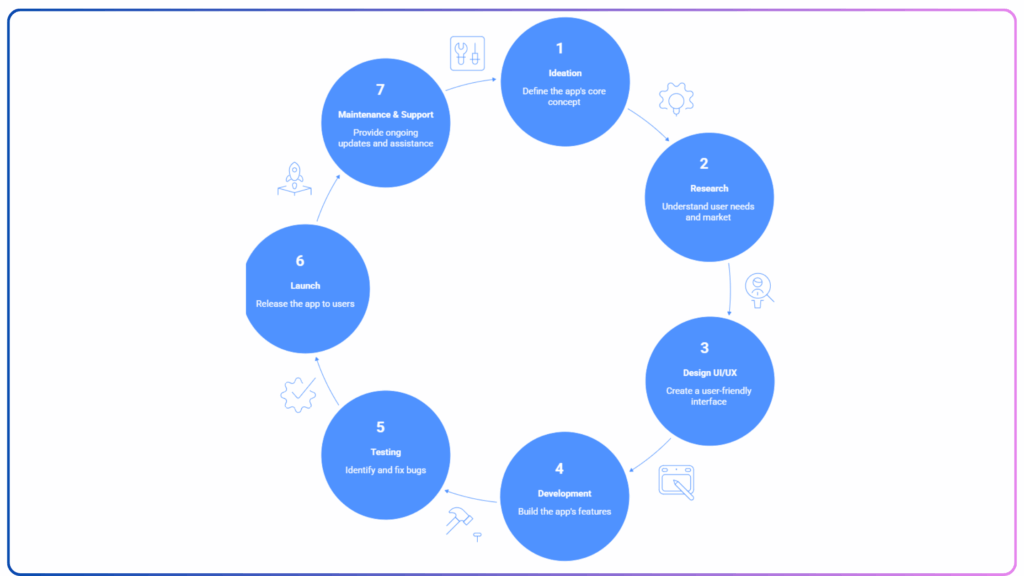
How To Develop an Educational App?
Building a robust edtech app is not just about code writing. It is because every step you take influences cost and performance and determines whether users stay engaged or just disappear quietly.
Ideation
This phase lays the groundwork for design, development, and launch. Ideation helps to establish a clear understanding of your vision and end goals through investigation, conversion, and app idea analysis.
Research
Next, do comprehensive market research to check how the educational app development will proceed. Understand what your target audience actually needs. This way, businesses can keep app development focused, scalable, and usable.
Design UI/UX
Good content is essential. It is because if experience feels heavy, users may get lost, and onboarding can be slow. A reliable UI/UX design agency can help create clear flows & simple screens.
Development
After the design stage, your education app development company will start coding & programming and integrate features like social learning, payment gateways, gamification, and assessment tools.
Testing
Testing is an essential part of e-learning app development to ensure your app is free of bugs and works as expected. The quality assurance team will conduct beta testing, user testing, and performance testing.
Launch to App Stores
Once you have tested and verified your edtech app, release it to the app store or marketplace. This phase is about app store listing, search engine optimization, & building an effective marketing plan.
Maintenance & Support
When you work with a trusted education app development company, they will continuously offer maintenance and support services to improve, upgrade, and boost the efficiency of your edtech app.
Advanced Technologies That Should Be Implemented in Education App Development
Modern technologies help businesses create fully functional and intuitive apps. Here are some of these:
Artificial Intelligence
AI in the education sector is improving the learning experience for both learners and instructors alike. It allows adaptive learning, automates assessments, and gives instant feedback. You can consult with a reliable AI development services provider to integrate advanced features into your e-learning platform.
Augmented Reality
By using AR in an educational app, you can offer an immersive learning experience, where students can visualize concepts in 3D. This ultimately helps in retention while helping students understand complex topics easily.
Virtual Reality
VR is especially helpful in medicine, engineering, and history, where learners can engage in practical experiences. Virtual reality integrated educational apps offer a safe place for experimentation and comprehensive understanding.
Large Language Models
Large language models like GPT are now used increasingly in education app development to facilitate natural language interactions. By integrating large language models, businesses can create virtual tutors that give instant replies to students’ queries and assist with learning new concepts.
Internet Of Things
IoT enhances educational apps by connecting devices and allowing real-time data collection. Also, IoT helps monitor student performance and track attendance.
Cost To Develop an Educational App
Telling the accurate e-learning app development cost is not possible. It is due to the fact. It depends on multiple factors. However, building a minimum viable product (MVP) will cost you somewhere between $15,000 to $50,000, and a complex app will range around $65,000 or beyond.
App Complexity
An app’s complexity is defined by the complexity of business logic, the number of roles, features, integrations, etc.
| Complexity Level | Estimated Costs | Timeframe |
| Simple | $15,000-$45,000 | 3-4 months |
| Medium | $45,000- $60,000 | 4-6 months |
| Complex | Over $65,000 | Can take more than 6 months |
Development Team Location
Online learning app development cost is also affected by where your developers are based. It is because every country has different living costs.
| Region | Development Cost (per hour) |
| USA | $45-$150 |
| UK | $50-$120 |
| Australia | $30-$150 |
| Eastern Europe | $30-$110 |
| Western Europe | $45-$120 |
| India | $20-$45 |
Type of App
While estimating the educational app development cost, deciding the type of app is also crucial.
| Type | Cost |
| Language Learning App | $50,000 |
| Math Learning App | $55,000 |
| Mobile Learning Management System | $75,000 |
| Apps for Organizing the Learning Process | $60,000 |
Choice of Platform
Another essential factor to consider is platform (iOS, Android, or both).
| Platform | Cost |
| iOS | $65,000 |
| Android | $50,000 |
| Hybrid for both iOS and Android | $45,000 |
Also, updating your app regularly helps fix critical issues in a timely manner and ensures it works as expected. Therefore, put aside about 15%- 20% of educational app development costs for maintenance.
Tips to Optimize the Education App Development Cost
Below are some effective ways to reduce e-learning app development costs. Take a look:
Clear Technical Roadmap
When you have a clearly defined blueprint beforehand, this cuts down unnecessary discussion time. So, before starting educational app development, be sure of your technical needs.
Prioritize Essential Features
The mobile education app development cost is greatly influenced by the number of features you include. So, it’s better to keep these as minimal as possible and give preference to only prominent features.
Error Detections
Bugs and errors should be identified at an early stage, as correcting these in the later development phase may cost you more.
Outsourcing to the Best Education App Development Company
When you outsource a reliable development team, you don’t have to invest time and money in hiring full-time employees, paying other bills, etc.
Monetization Strategies for Mobile Education App Development
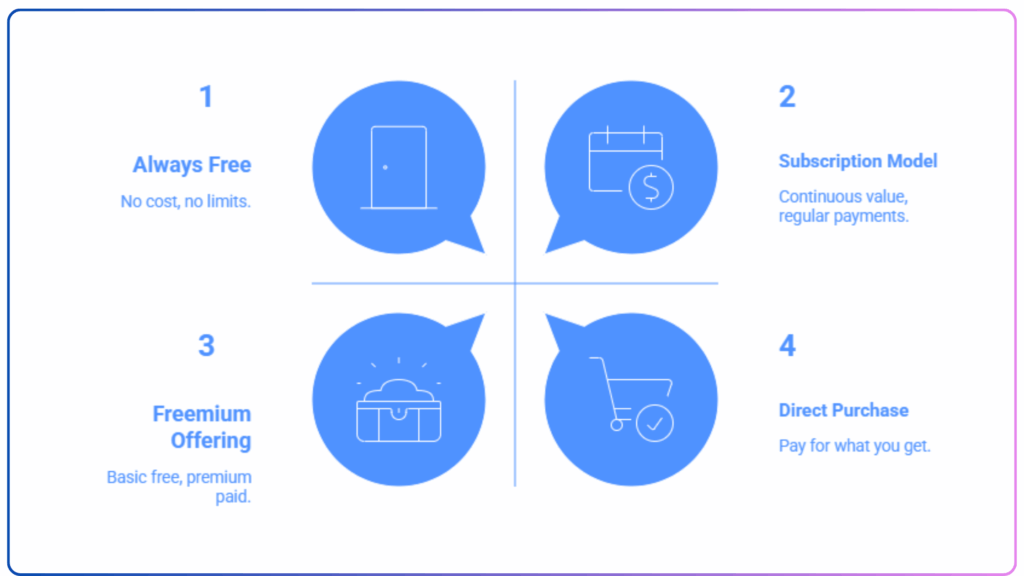
Education app development is a long-term investment. Therefore, choosing the right monetization approach is necessary to ensure it doesn’t just exist but grows. And there are many strategies, but we have listed the best 5 below:
Freemium
Users access basic content for free. Advanced features or premium courses are locked behind a paywall. This model works well for user acquisition.
Advertisements
Ads generate revenue without charging users directly. It suits free learning apps, but must be balanced to avoid disrupting the learning experience.
Subscriptions
Users pay monthly or yearly for full access. This approach supports predictable revenue and works well for eLearning app development platforms with ongoing content.
Pay-Per-Course
Learners pay only for the specific courses they need. It offers flexibility and appeals to users seeking targeted learning outcomes.
In-App Purchase
Extra features, certificates, or learning materials are sold within the app. This model complements other monetization strategies effectively.
Challenges in eLearning App Development
Building a reliable learning platform comes with its own set of challenges. These issues often surface as the app scales or user expectations grow.
- Content consistency: Keeping learning material updated and structured across courses takes ongoing effort. Poor content flow can reduce learner engagement.
- User engagement: Sustaining interest in long-term learning is difficult. Without interactive eLearning app features, users may drop off quickly.
- Platform compatibility: Ensuring smooth performance across devices and operating systems is a common hurdle in mobile education app development.
- Scalability issues: As user numbers grow, performance can suffer if the app architecture is not planned early. This directly impacts online learning app development outcomes.
- Data security: Educational platforms handle sensitive user data. Maintaining privacy and compliance requires careful design and regular audits.
- Integration complexity: Connecting third-party tools like payment systems, analytics, or live classes can increase development time and cost.
Addressing these challenges early helps create a stable, learner-friendly platform that supports long-term growth.
Top 5 Most Popular Educational Apps
Take a look at the world’s most used learning apps:
Duolingo
It is the most popular app for learning a new language. Duolingo’s game-like experience and user-friendly interface are the reasons behind its massive growth.
Overall Rating: 4.54
Available on: Both iOS and Android
Downloads: 100 Million+
Quizlet
Quizlet is widely used for self-paced learning through flashcards, quizzes, and practice tests. Its simple interface and collaborative study tools make it popular among students and educators alike.
Overall Rating: 4.45
Available on: Both iOS and Android
Downloads: 10 Million+
Photomath
Photomath helps users solve mathematical problems by scanning equations using a mobile camera. Its step-by-step explanations make complex concepts easier to understand, especially for school-level learners.
Overall Rating: 4.4
Available on: Both iOS and Android
Downloads: 100 Million+
BYJU’s
BYJU’s is a well-known online learning platform offering structured video-based lessons for school and competitive exam preparation. Its personalized learning paths and visual explanations drive strong user engagement.
Overall Rating: 4.5
Available on: Both iOS and Android
Downloads: 10 Million+
Babbel
Babbel focuses on practical language learning with real-world conversations and grammar-focused lessons. Its subscription-based model appeals to users looking for structured and goal-oriented learning.
Overall Rating: 4.58
Available on: Both iOS and Android
Downloads: 10 Million+
Partner with the Best Education App Development Company
We at CodingWorkX are the preferred choice of top edtech businesses and institutions for building exceptional learning platforms. With our educational app development services, we bring years of expertise to the table and build tailored apps for the different requirements of educational institutes and businesses. Our team helps you choose the right app type, features, process, and tech stack that makes an app a success in a crowded market.
What makes our mobile app development approach different is the focus on alignment. Instead of overloading the app with complexity, we focus on clarity, performance, and long-term usability across devices.
If you are also in the education industry, contact us now to build immersive apps.
FAQs: Educational App Development
How much does it cost to develop an educational app?
Well, there is no fixed answer for this. Developing an e-learning app will fall somewhere between $20,000 and $60,000, or even more, depending on features, functionalities, and scalability needs.
How can your educational app development company help my business?
As an experienced education app development company, CodingWorkX helps businesses design and build custom learning solutions aligned with their goals. From planning to deployment, our educational app development services focus on usability, performance, and long-term scalability.
How long does it take you to build an online learning app?
The timeline for online learning app development typically ranges from 3 to 6 months, depending on features, integrations, and testing scope. More advanced mobile education app development projects may take longer due to custom workflows and content structures.
What are some essential features for mobile education app development?
Core education app features include user registration, course management, video lessons, progress tracking, and assessments. Modern eLearning app features also support live classes, offline access, push notifications, and secure payment gateways.
Why should I invest in education app development?
Investing in education app development allows businesses to scale learning delivery, improve engagement, and reach a wider audience. Also, with the rising demand for digital education, educational app development supports long-term growth, flexibility, and measurable learning outcomes.